Rise Of Coworking Spaces In Mumbai: Why Businesses Prefer Them
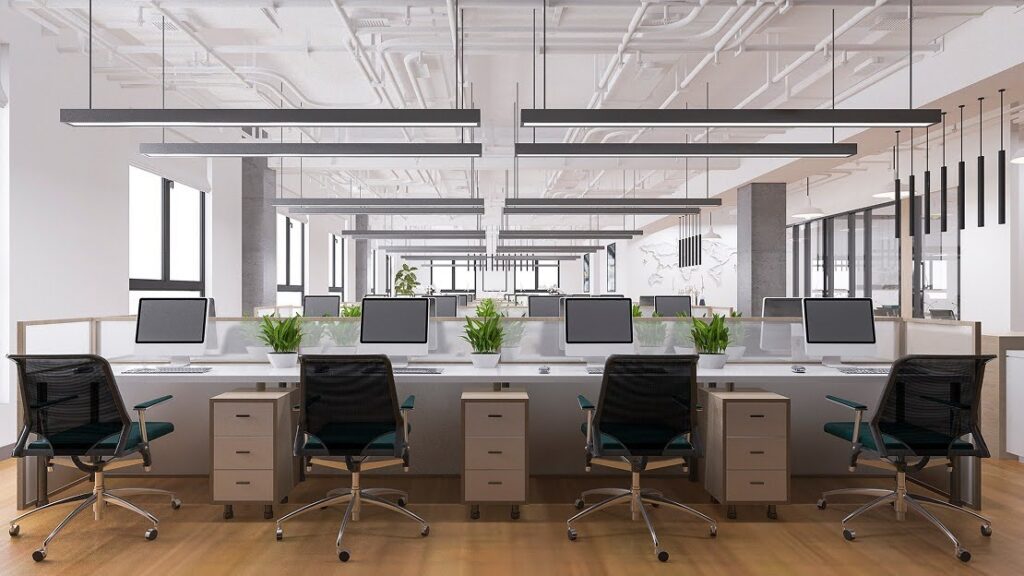
When shared workspaces arrived in Mumbai in 2017, coworking was still considered a startup novelty. Nine years on, it has become a mainstream component of India’s commercial real estate market, and Mumbai is at the heart of that transformation.
India’s co-working market is valued at USD 4.53 billion in 2026, growing at a 13.94% CAGR and projected to reach USD 8.7 billion by 2031.
Another report for all-India office data shows flex space leasing surged 77% year-on-year to 3.9 million sq ft, its share in overall office leasing rising to 21% from 14% a year earlier in Q1 2026. In absolute terms, flex operators delivered their best-ever annual leasing performance across India in 2025.
Mumbai accounts for approximately 13% of India’s total coworking inventory, making it the second-largest coworking market in the country after Bengaluru. That share is growing, driven by enterprise demand that has fundamentally changed the nature of the product.
Coworking Formats: What Mumbai Offers in 2026
The ‘coworking space‘ label covers a wide spectrum of products in Mumbai today. Understanding the formats is essential before making an occupancy decision.
|
Space Type |
Typical Cost |
|
Coworking / Hot Desk |
₹12,000 – 20,000 |
|
Dedicated Desk |
₹10,000 – 40,000 |
|
Private Cabin/ Suite |
₹40,000 – 70,000 |
|
Managed / Serviced Office |
₹12,000 – 30,000 |
|
Pre-fitted / Plug-and-Play |
₹12,000 – 30,000 |
Why Businesses in Mumbai Are Choosing Coworking
The shift toward coworking is not driven by fashion; it is driven by hard economics and operational reality. Here are the forces making flexible workspaces the rational choice for a growing share of Mumbai’s business community.
1. Cost Flexibility Without Compromise
A traditional office lease in Mumbai requires a security deposit of 6 months’ rent, upfront fit-out capital, CAM charges, and a lock-in period of 3–5 years.
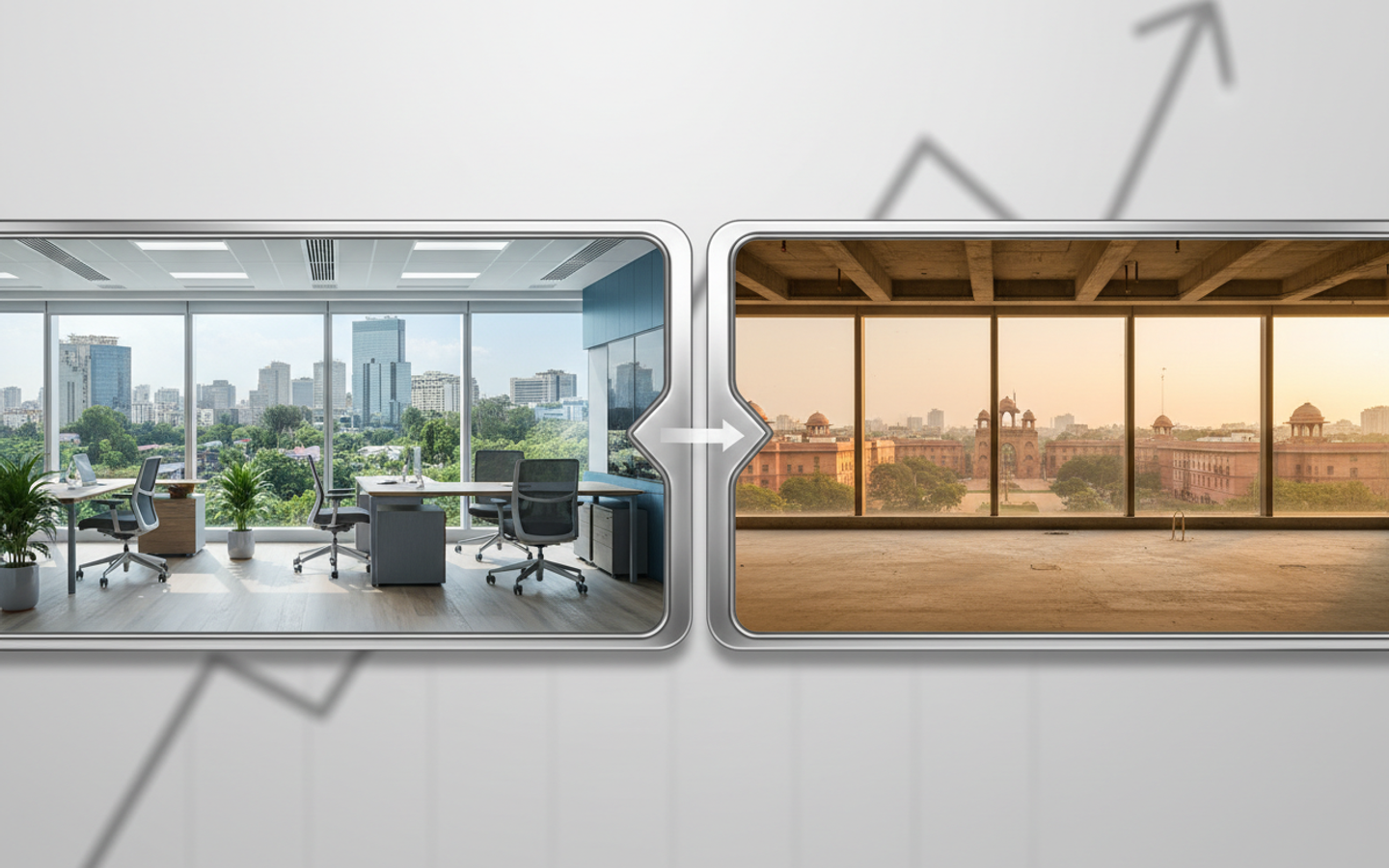
A managed coworking arrangement for the same team eliminates the security deposit, removes fit-out capital expenditure, and delivers a plug-and-play environment from day one. Research across multiple market studies indicates coworking can deliver a huge reduction in occupancy costs versus traditional leasing, (of course depending on team size and requirements.)
2. Speed to Market
In Mumbai’s competitive business environment, the ability to establish operational presence quickly is a genuine competitive advantage.
A fully furnished, IT-equipped coworking suite can be activated in 48–72 hours. A traditional bare-shell office might take, at best, 8–16 weeks of fit-out work, contractor management, and infrastructure setup before a single call can be made. It provides operational immediacy while allowing time to understand the sub-market before committing to a long-term lease.
3. Talent and Ecosystem Access
Mumbai’s coworking hubs are not just offices, they are curated business ecosystems. The best spaces in BKC, Powai, and Andheri host clusters of startups, scale-ups, investors, accelerators, and service providers.
The informal networking and deal-making that happens in a well-run coworking environment has real commercial value that a standalone office cannot replicate. For early-stage companies in particular, proximity to investors, potential clients, and talent – all in a shared environment where introductions happen, is a meaningful driver of growth.
4. Hybrid Work Infrastructure
The post-pandemic hybrid work model has created a new requirement: businesses need office infrastructure that employees can access flexibly, not just a single headquarter location.
Coworking networks address this directly. Operators allow enterprise clients to give employees access across multiple city locations.
Coworking spaces have evolved into what one 2026 market commentary aptly describes as ‘Managed Office Solutions’ – preferred by multinational corporations seeking operational agility rather than fixed square footage commitments. This is no longer a startup conversation. It is an enterprise real estate strategy.
Top Coworking Locations in Mumbai: Where to Set Up
|
Location |
Cost Per Seat (₹/mo) |
|
BKC (Bandra Kurla Complex) |
₹25,000–45,000 |
|
Lower Parel / Worli |
₹20,000–35,000 |
|
Andheri East (Kurla Rd) |
₹10,000–25,000 |
|
Powai |
₹15,000–30,000 |
|
Goregaon East |
₹12,500–25,500 |
|
Malad East / Borivali |
₹8,000–10,500 |
|
Navi Mumbai (Vashi/Airoli) |
₹8,000–12,500 |
|
Thane / Eastern Suburbs |
₹8,000–14,500 |
|
Lal Bahadur Shastri Marg |
₹10,000- 16,000 |
Indicative June 2026 market rates. Actual pricing subject to negotiation, occupancy duration, and operator-specific terms.
Coworking vs Traditional Lease: Side-by-Side
|
Factor |
Traditional Lease |
Coworking / Managed Office |
|
Upfront Capital |
(Security deposit + fit-out) |
Minimal |
|
Speed to Occupancy |
8–16 weeks |
24–72 hours |
|
Flexibility |
3–5 year lock-in |
Monthly to 12-month terms |
|
Customisation |
Full (with CAPEX) |
Limited to managed suites |
|
IT Infrastructure |
Build from scratch |
Included (WiFi, printers, etc.) |
|
Brand Identity |
Full branding possible |
Limited |
|
Scalability |
Lease size is fixed |
Scale up/down with notice |
|
Best For |
Established teams > 50 pax, stable headcount |
Growing teams, project teams, new market entry |
Enterprise Coworking: The Market Has Changed
The perception that coworking is ‘for startups’ was accurate back in 2017. Coworking operators have expanded their Mumbai footprint by launching new centres amid corporate demand.
Today’s managed offices in Mumbai offer dedicated floors, custom branding, enterprise-grade IT infrastructure, biometric access, concierge reception, and sustainability certifications; all the attributes a Fortune 500 or BFSI GCC needs, without the capital commitment of a direct lease.
What to Look for When Choosing a Coworking Space in Mumbai
Not all coworking spaces are equal. Here is Citadel’s framework for evaluating options:
|
Evaluation Criteria |
What to Check |
Red Flags |
|
Location & Connectivity |
Metro access, parking, client accessibility |
Poor last-mile connectivity |
|
Infrastructure Quality |
Power backup, internet SLA, HVAC |
Frequent power cuts, slow WiFi |
|
Community Fit |
Industry mix, event calendar, networking quality |
Low occupancy, transient membership |
|
Contract Terms |
Lock-in period, notice period, price escalation |
Long lock-ins, opaque pricing |
|
Scalability |
Can you expand to adjacent seats or floors? |
No growth path within the building |
|
Brand Perception |
Does this address help or hurt client confidence? |
Shabby reception, poor signage |
|
Operator Financial Health |
Is this operator stable and well-capitalised? |
Multiple location closures in recent history |
Is Coworking Right for Your Business?
Here is an honest answer: it depends on where you are in your growth trajectory, how stable your headcount is, and whether a fixed address is critical to your brand positioning.
Coworking is typically the right choice if your team is under 30 people and growing, if you are entering a new market and want to test it before committing capital, if your work model is hybrid or project-based, or if preserving capital for operations and growth is a higher priority than fixed real estate investment.
A direct lease makes more sense if your team is above 50 people with a stable headcount, and/or if you need full branding and custom fit-out, or if your operations require dedicated infrastructure (server rooms, labs, compliance zones), or if you have a clear long-term commitment to a specific location.
Mumbai’s coworking market has matured — but that maturity brings its own complexity. Operators vary significantly in quality, pricing transparency, and contractual flexibility.
Citadel Propcon works with businesses navigating these decisions, bringing market knowledge that goes beyond what a listing can offer.
Frequently Asked Questions
How much does a coworking space cost per desk in Mumbai in 2026?
Costs vary significantly by location and format. Hot desks in peripheral submarkets like Navi Mumbai or Goregaon range from ₹8,000–₹25,500 per desk per month. In Andheri East, this ranges from ₹10,000–₹25,000, and in premium locations like BKC or Lower Parel can reach ₹25,000–₹45,000 per month.
Is coworking more cost-effective than leasing in Mumbai?
For teams under 15–20 people, coworking almost always delivers better all-in economics when deposit, fit-out, CAM, and infrastructure costs are factored into the lease scenario.
For teams above 30–50 people with stable headcount, a direct pre-fitted lease often delivers better per-seat value. The crossover point depends on the specific location, lease terms, and operator pricing.
Which coworking spaces are best in Mumbai?
Selecting a coworking space for your business should be based on location, community fit, contract flexibility, and infrastructure quality, not brand alone.
Can large companies (100+ employees) use coworking in Mumbai?
Absolutely. The managed office product in Mumbai is specifically designed for enterprise clients and supports teams of 50–500+ people on dedicated, branded floors.
However, depending on if you require dedicated spaces or resources for your office, and if you have a stable headcount, for a 100+ employee count, leasing a conventional office sounds better.
What is the difference between coworking and a managed office in Mumbai?
A coworking space is a shared environment where multiple companies work in close proximity; with varying degrees of shared amenities.
A managed office is a fully private, often custom-branded floor or suite within a larger building, operated by a third party but exclusive to your organisation. Managed offices offer privacy, brand identity, and enterprise infrastructure while retaining the flexibility and capital-efficiency of coworking.