Central Mumbai vs Western Suburbs: Where Should Your Company Set Up Office in 2026?

Ask ten people where to set up an office in Mumbai and you’ll get ten confident, contradictory answers. That’s because “Mumbai office space” isn’t one market; it is many, with fundamentally different economics, tenant profiles, and strategic logic.
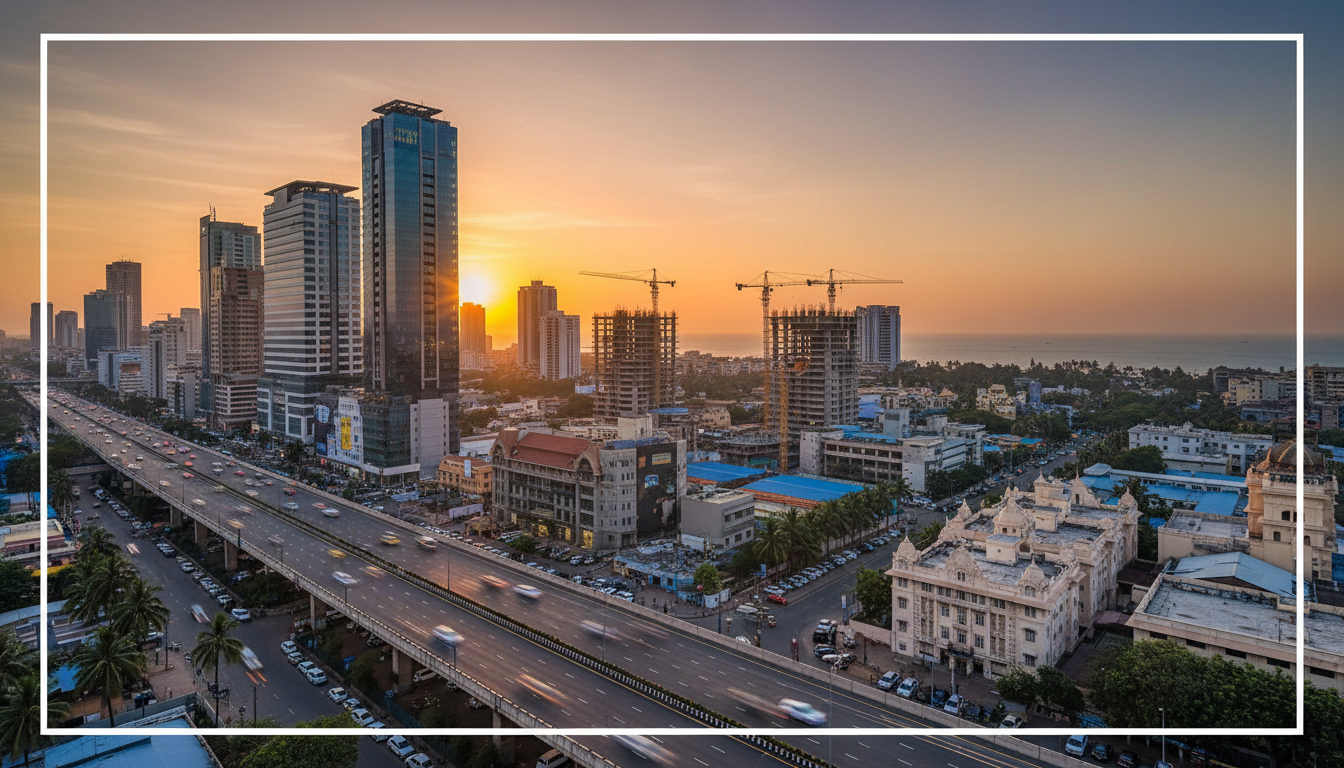
Central Mumbai (BKC, Lower Parel, Worli, and the older Nariman Point core) and the Western Suburbs (Andheri, Powai, Goregaon, and their surrounding corridors) aren’t just geographically distinct; they represent two different bets on what your office is actually for.
Here’s a clear-eyed, current comparison to help you make that decision deliberately rather than by default.
Defining the Two Corridors
Central Mumbai refers broadly to the city’s established and re-established business core: Bandra-Kurla Complex (BKC), Lower Parel, Worli, and the older Nariman Point district. These areas host Mumbai’s highest-profile financial institutions, global bank offices, consulting firms, and brand-forward corporate headquarters.
The Western Suburbs span Andheri East and West, Powai, Goregaon, and the corridors extending toward Malad and beyond. This geography is built around IT/ITES, technology, aviation, logistics, and an increasingly diverse GCC back-office presence, anchored by campus-style business parks and airport-adjacent connectivity.
Rent Comparison: The 2026 Benchmarks
Business district | Corridor | Rent range (₹/sq.ft./month) | Cost Per Seat (₹/mo) |
BKC | Central Mumbai | ₹325–₹500+ | ₹25,000–45,000 |
Lower Parel / Worli | Central Mumbai | ₹225–300 | ₹20,000–35,000 |
Andheri East | Western Suburbs | ₹135–200 | ₹10,000–25,000 |
Goregaon East | Western Suburbs | ₹ 140–200 | ₹12,500–25,500 |
Powai | Western Suburbs | ₹150–200 | ₹15,000–30,000 |
The gap is stark: a company can secure comparable Grade A specifications in Powai or Goregaon at roughly half the per-square-foot cost of BKC.
Central Mumbai: Strengths and Trade-offs
Who it’s built for:
BKC is Mumbai’s financial nerve centre, it is home to SEBI, major exchanges, global banks, and consulting firms that need proximity to regulators and each other.
Lower Parel and Worli have evolved from an old mill district into a modern corporate and media hub, anchored by developments like Phoenix Mills, and now host a mix of corporate headquarters and lifestyle-driven business tenants.
The real cost of a prestige address:
You’re paying a significant premium for location prestige, client-facing convenience, and proximity to financial infrastructure.
For BFSI, legal, and consulting firms where the address itself signals credibility to clients and regulators, this premium is often justified. For a headcount-heavy back-office function, it rarely is.
Western Suburbs: Strengths and Trade-offs
Who it’s built for:
IT and technology firms favour Powai’s campus-style business parks for their integrated infrastructure and strong residential catchment. Andheri East draws IT/ITES, aviation, and logistics companies for its airport proximity and SEEPZ legacy talent pool.
Goregaon East, anchored by Mindspace Business Park, has become a base for major IT services firms seeking a greener, more affordable alternative to Powai.
Connectivity and talent catchment:
The Western Suburbs benefit substantially from Metro Line 2A and the Western Express Highway, and increasingly from Metro expansion that’s improving cross-suburb commutes.
The talent catchment here skews toward tech and engineering graduates rather than the finance-specific talent concentrated around Central Mumbai, an important consideration if your hiring plan depends heavily on one or the other.
The Decision Framework
Rather than asking “which is better,” the more useful question is which of these four factors matters most for your business:
Industry positioning: BFSI and client-facing financial services generally benefit from Central Mumbai’s address value. IT/ITES, tech, and back-office functions rarely need it.
Talent map: Map where your target hires actually live and what skills they bring — finance talent concentrates around Central Mumbai; tech and engineering talent skews toward the Western Suburbs and further north.
Budget per employee: Model total occupancy cost (rent + CAM + parking + fit-out) per employee, not just headline rent per square foot, the Western Suburbs’ savings compound fast at scale.
Growth trajectory: If you expect to scale headcount significantly over 3-5 years, the Western Suburbs’ larger, newer floor plates and expansion-friendly campuses often serve growth better than Central Mumbai’s more constrained, expensive stock.
Conclusion
There’s a reason this decision keeps getting made by default rather than by design: Central Mumbai and the Western Suburbs don’t compete on the same terms, so comparing them head-to-head rarely produces a clean answer.
The company that gets this right isn’t the one that finds the “better” corridor. It’s the one that’s honest about what its office is actually for, and lets that answer choose the geography rather than the other way around.
That distinction is easy to state and harder to act on once budgets, headcount plans, and a few strong opinions in the room are all pulling in different directions. Citadel builds this decision framework with clients before a single building gets shortlisted; because the corridor choice, done properly, tends to make every decision after it simpler.
FAQs
Is it cheaper to set up an office in the Western Suburbs than in Central Mumbai?
Generally, yes. Powai and Goregaon run roughly ₹140–200 per sq. ft. against BKC’s ₹325–500+. But we’d always convert this to cost per seat before comparing, since floor efficiency varies enough across buildings to change the real gap.Which is better for a BFSI company: BKC or Andheri East?
Depends on what the space needs to do. BKC earns its premium for functions that sit close to regulators and other banks; Andheri East makes more sense for back-office or GCC functions where headcount economics matter more than the address itself.Is Powai a good option for IT and tech companies?
Usually, yes. Campus-style parks give it strong infrastructure and talent retention, though we’d still map it against where your specific hiring pool actually lives before committing.How much does commute time differ between Central Mumbai and the Western Suburbs?
Enough to matter for retention. Peak-hour commutes commonly run 60–90 minutes one way, and a location mismatched to your talent pool tends to show up as attrition well before it shows up in an exit interview.What factors should a company consider beyond rent when choosing a Mumbai office location?
CAM charges, parking, fit-out, and escalation clauses first; these routinely close the gap between two buildings that looked different on headline rent alone. Talent catchment and client-side connectivity matter just as much, but they’re easier to underweight in a spreadsheet.Can Citadel Propcon help decide between Central Mumbai and the Western Suburbs?
Yes. We build the decision framework around your industry, talent map, and growth plan before recommending a corridor. Most of the value is in getting that sequence right before anyone starts touring buildings.