South Mumbai Office Space In 2026: Is The Old CBD Worth It For A Headquarter Address?

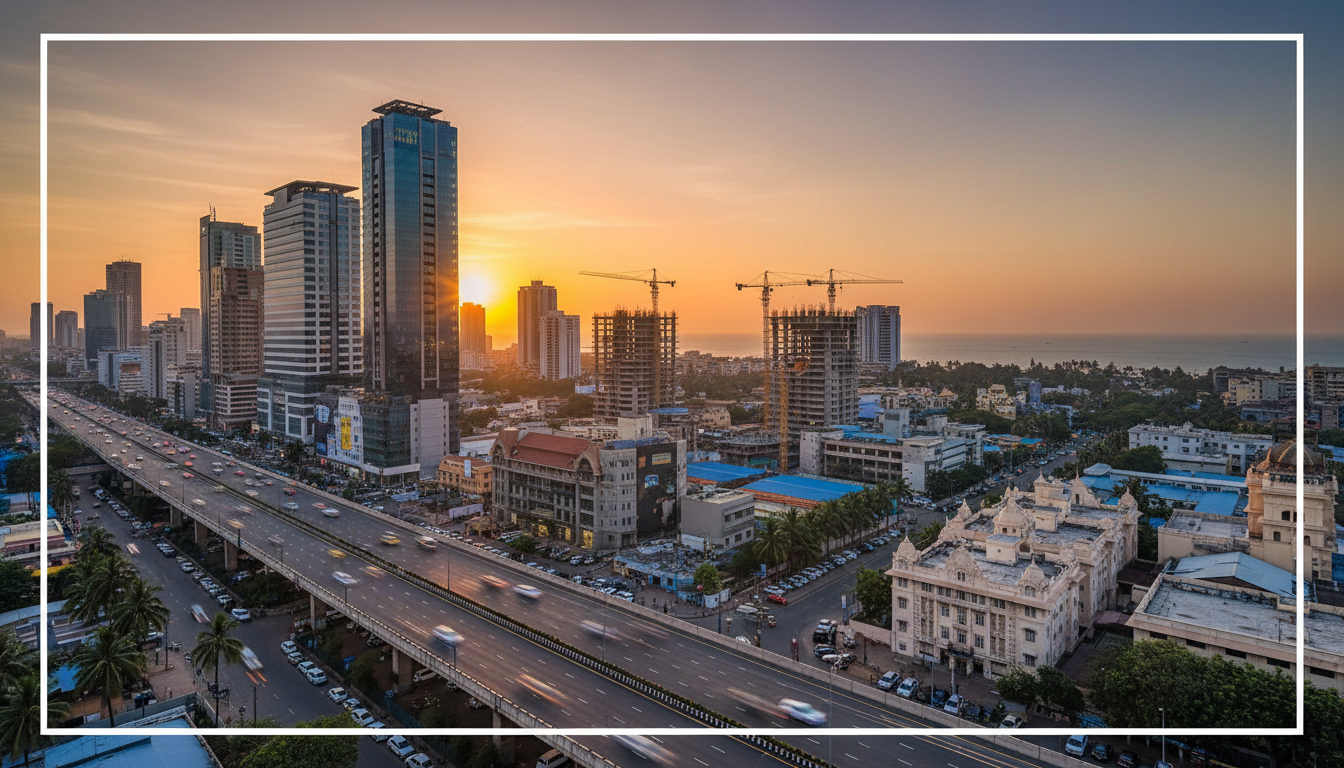
For most of the last two decades, the story of Nariman Point and Fort was one of managed decline: Mumbai’s original Central Business District (CBD), gradually emptied out as BKC and Lower Parel started absorbing the city’s growth.
In 2026, that narrative needs an update. South Mumbai’s old CBD is genuinely reviving, with rents climbing, credible institutional tenants signing leases, and infrastructure finally catching up. The honest question for anyone considering a headquarters address is whether it’s substantial enough to justify choosing South Mumbai over BKC or Lower Parel today.
Here’s a clear-eyed answer.
The Revival, In Numbers
Nariman Point rents have moved meaningfully, from around ₹260 per sq. ft. per month toward levels property agents anticipate could reach roughly ₹300, with a significant rise recorded over the past year alone, driven partly by improving connectivity and partly by a genuine shift in corporate perception.
This isn’t a speculative bubble narrative; it’s underpinned by real leasing activity. The Polish Consulate took roughly 3,000 sq. ft. in the Nirmal Building, the German Consulate secured 7,442 sq. ft. in Hoechst House, and firms including the Boston Consulting Group and Jefferies have taken space in the neighbourhood, a tenant mix that signals renewed confidence from both diplomatic and high-end professional services occupiers.
At the same time, Mumbai’s broader commercial office vacancy has hovered around 15% in recent years, meaning South Mumbai’s revival is happening within a market that still has real slack elsewhere, worth keeping in perspective.
Why Companies Are Coming Back
- The heritage values being rediscovered:
Nariman Point’s Marine Drive-facing addresses, Art Deco-adjacent architecture, and decades-long association with Mumbai’s original corporate elite carry a kind of institutional weight that newer business districts wish to replicate.
For firms where the address itself communicates permanence and standing, like law firms, consulates, legacy financial institutions, this matters commercially more than aesthetically.
- Connectivity is genuinely improving:
The under-construction Metro Line 3, linking SEEPZ to Colaba, directly serves this precinct, and the 10.58-km Coastal Road project is expected to materially cut travel times into South Mumbai. These two infrastructure upgrades address the area’s historic weak points head-on.
- Proximity to courts, consulates, and government remains a structural advantage:
For legal firms near the Bombay High Court, for consulates needing proximity to counterpart missions and Mantralaya, and for organisations whose work depends on government-adjacent access, no other Mumbai business district offers a comparable concentration of these institutions.
South Mumbai vs BKC: A Genuine Comparison
Factor | South Mumbai (Nariman Point/Fort) | Bandra-Kurla Complex (BKC) |
Current rent range | ~₹300 /sq.ft./month
| ~₹400 /sq.ft./month |
Building stock | Largely legacy 1970s-80s towers; retrofits vary widely in quality | Modern Grade A/A+, purpose-built for corporate HQs |
Prestige/heritage value | High. Genuine institutional and historic weight | High. But a newer, “modern” form of prestige |
Connectivity (current) | Improving; Metro 3 and Coastal Road still maturing | Strong; established as the city’s financial connectivity hub |
Best-fit tenants | Law firms, consulates, legacy financial institutions, government-adjacent organisations | BFSI, global banks, MNC headquarters, consulting firms |
Compliance/ modernisation | Legacy structures often need retrofitting to meet current standards | Largely built to current fire, safety, and sustainability codes already |
The rent gap has narrowed considerably, but it hasn’t closed, and building quality, not address alone, is often the deciding factor once occupiers move past the initial prestige appeal.
The Case Against South Mumbai
Many Nariman Point and Fort buildings are genuinely legacy structures, meeting current fire safety, seismic, and sustainability compliance standards; but can require significant retrofit investment that a newer BKC or Lower Parel tower simply wouldn’t need.
Parking remains constrained across the precinct in a way that’s structurally difficult to fix given the area’s original 1970s-80s planning.
And while Metro Line 3 and the Coastal Road are real projects, both are still maturing, a company relocating today is partly betting on connectivity that isn’t fully realised yet, not connectivity already in place.
Who Should Seriously Consider South Mumbai
South Mumbai makes strong sense for law firms needing proximity to the Bombay High Court, consulates and diplomatic missions, legacy financial institutions and family offices where heritage address value genuinely matters to their client base. The same goes for organisations whose work depends on frequent government or regulatory interface.
It’s a considerably weaker case for IT/ITES, GCC back-office functions, or any headcount-heavy operation where per-square-foot cost and modern building specification matter more than address heritage: for those, BKC, Lower Parel, or the Western Suburbs remain the more defensible choice.
South Mumbai’s revival is real, not manufactured; but “worth it” depends entirely on what your headquarters address needs to do for your business. If prestige, heritage, and proximity to courts or consulates carry genuine commercial value for your organisation, the old CBD is a legitimate option in 2026.
But if your priority is modern building specification, headcount scalability, or cost efficiency, BKC or the Western Suburbs still make a stronger case. At Citadel Propcon, we help clients answer this precisely rather than defaulting to either the “South Mumbai heritage” pitch or the “BKC is obviously better” assumption.
FAQs
Is Nariman Point a good location for a company headquarters in 2026?
It can be, particularly for law firms, consulates, legacy financial institutions, and organisations needing proximity to government or the courts, but companies prioritising modern building specifications or cost efficiency may still find BKC or the Western Suburbs a stronger fit.
What is the current office rent in Nariman Point?
Asking rents in Nariman Point have been reported around ₹300 as the area’s revival continues, still generally below BKC’s approximate ₹400 per sq. ft. benchmark.
Why is South Mumbai’s CBD reviving after years of decline?
The revival is driven by a combination of improving connectivity (Metro Line 3, the Coastal Road), renewed interest from consulates and high-end professional services firms, and the area’s enduring prestige and heritage value.
What are the drawbacks of leasing office space in South Mumbai’s old CBD?
Many buildings are legacy 1970s-80s structures that may require retrofitting to meet current fire, safety, and sustainability standards, and parking availability remains a structural constraint across the precinct.
Is South Mumbai better than BKC for a company headquarters?
It depends on the business. South Mumbai offers stronger heritage and institutional-proximity value at a generally lower rent, while BKC offers modern Grade A specifications and stronger established connectivity, and neither is a universal answer.