Office Lease vs Buying an Office in Delhi: Which Is Better for Your Business?

Choosing an office in Delhi does not only depend on real estate factors but could even affect the cash flow, convenience of employees, the image of the brand, and growth plans. One company might find it wise to own an office property, while another would rather lease it since it will allow keeping the funds necessary to recruit people, advertise the business, etc.
Thus, how do Office Space for Lease in Delhi compare to an office purchase? The question has more to do with the future of your business than with prices now.
Office Lease vs Buying: The Fundamental Difference
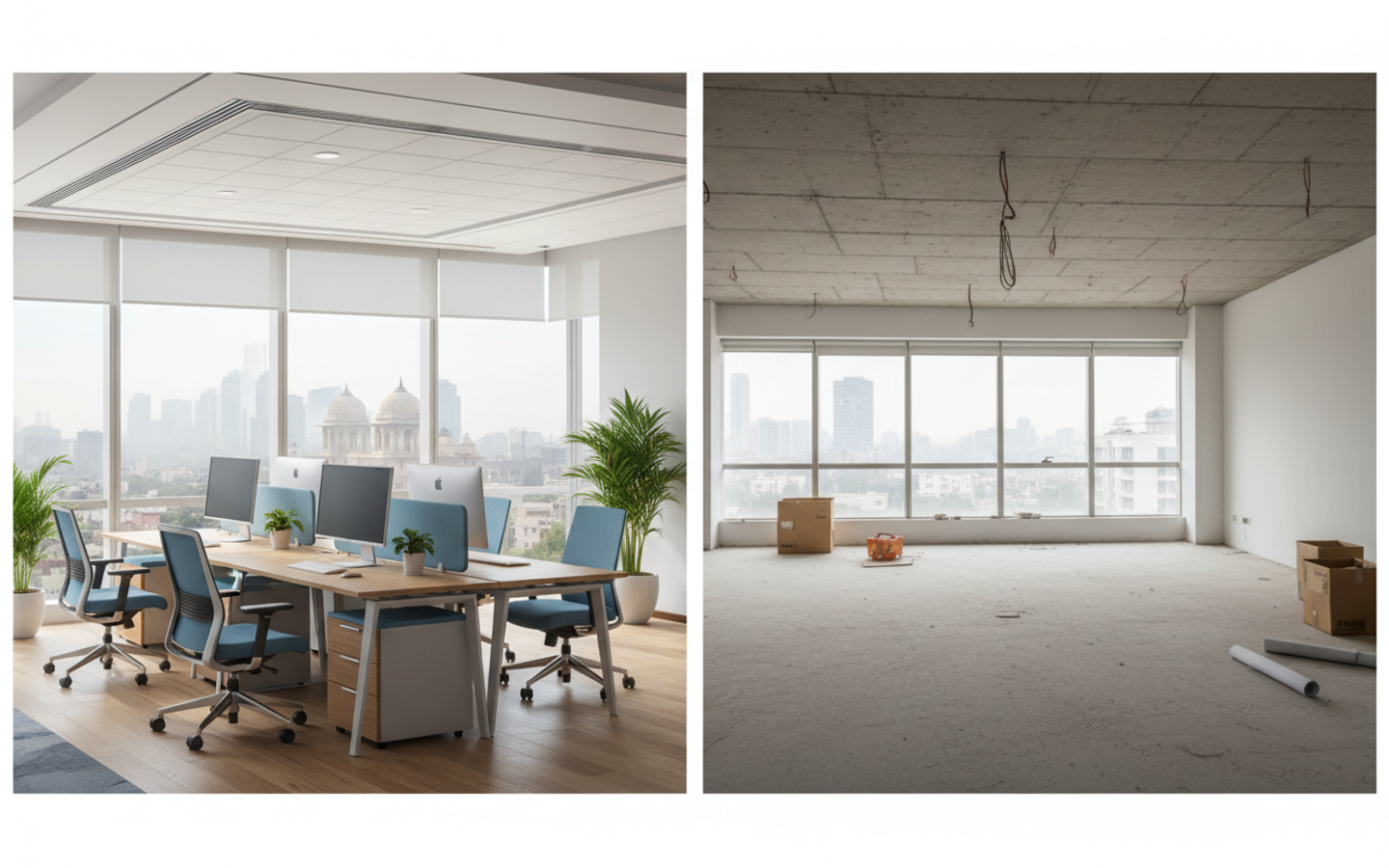
Leasing gives your business the right to use a property for an agreed period without taking ownership. Purchase transforms the workplace into a corporate asset, but involves a much bigger financial outlay.
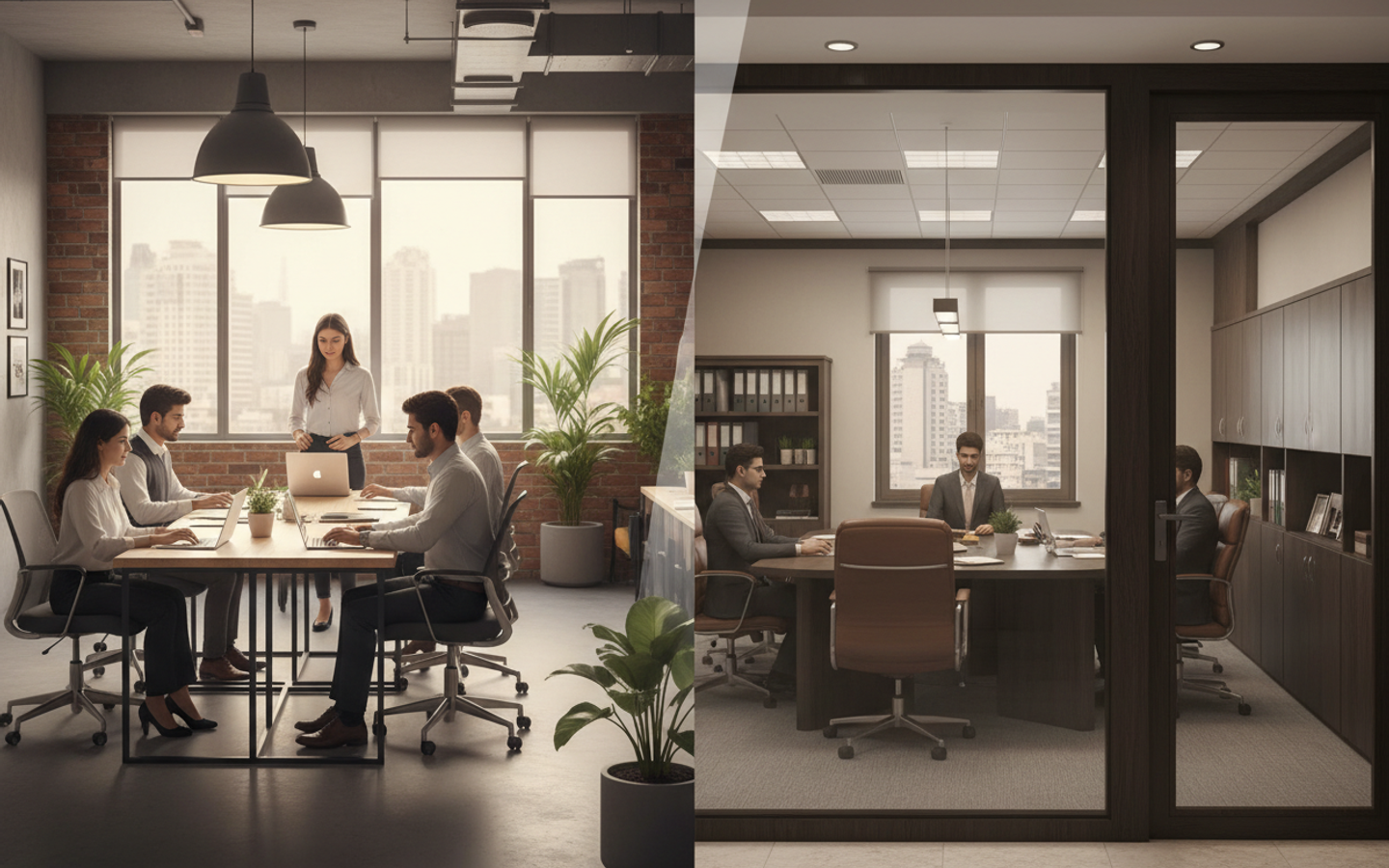
To put it simply, leasing emphasizes flexibility and liquidity, while purchasing emphasizes ownership and asset generation.
Why Leasing May Be the Better Alternative
For a corporation looking at Office Space for Lease in Delhi, a professional office space can be acquired using much less cash than that required for a straight purchase. More money is left for recruitment, technology, inventories, customer acquisition, or growth.
Leasing allows for relocation. A business can require 20 seats right now and 60 seats in two years. A well-established firm can consider moving closer to customers or employees. A lease can provide room to make those changes without having to sell a property first.
Location is another advantage. Prime Delhi business districts can be expensive to buy. Leasing may allow a company to establish its presence in a strategically valuable location without taking on the full cost of ownership.
Before signing, businesses should examine deposits, lock-ins, escalation clauses, maintenance, fit-outs, renewal terms, and exit conditions.
When Buying an Office Starts Making Sense
Buying becomes more compelling when a business has strong financial capacity and a clear intention to stay put.
If you expect to occupy the same premises for many years, ownership can create equity instead of leaving the business with only a usage right after years of rent payments. There could also be appreciation in value through time, though this must not be assumed to be automatic.
Possession gives greater control of future space planning as permitted by applicable regulations. The permanent address may also benefit the business seeking stability in terms of its location.
There is, of course, a cost to pay for this control. Investment in property involves the commitment of money, along with all kinds of expenses in terms of upkeep, taxation, finance charges, insurance, and more. Exit could become problematic in case the firm finds a need to relocate.
The True Cost: Look at More Than Rent/Purchase Price
A lease should not be evaluated only by monthly rent, just as a purchase should not be judged only by the sale price.
For leasing, calculate the complete occupancy cost: rent, deposit, escalation, interiors, furniture, utilities, maintenance, parking, and potential restoration costs at exit.
For buying, consider the down payment, loan interest, registration and transaction costs, interiors, property taxes, maintenance, insurance, and the opportunity cost of the capital invested.
Then ask: what could the business do with the money not committed to property?
If ₹1 crore is invested in an office, for example, that capital cannot simultaneously be used for expansion, equipment, marketing, or hiring. The right comparison is therefore not simply “rent versus EMI.” It is “occupancy cost versus the business value of capital.”
A Practical Decision Test for Delhi Businesses
Instead of following a one-size-fits-all rule, Citadel Propcon recommends evaluating five factors.
1. Business maturity
Startups and rapidly changing businesses usually benefit from flexibility. Established companies with predictable operations may be better positioned to consider ownership.
2. Expected stay
If your business may move within three to five years, buying can create unnecessary rigidity. If you expect to remain in one location much longer, ownership deserves serious consideration.
3. Available capital
Do you have enough capital to buy without weakening day-to-day operations? If purchasing would restrict growth investment, leasing may be financially healthier.
4. Workforce and accessibility
Delhi businesses need to consider employee commute, metro connectivity, client access, parking, nearby amenities, and the location’s overall business environment. A cheaper property can become expensive if it makes recruitment or client meetings difficult.
5. Expansion requirements
Think beyond today’s headcount. If your team could double, will the property still work? A lease may make scaling easier, while ownership can work well when future space requirements are predictable.
Why Office Space for Lease in Delhi Remains Attractive
The business environment of Delhi provides various options of office spaces for the business firms. The current trends in the market suggest a high demand for good quality offices not only in Delhi but throughout India. Thus, leasing becomes relevant for business firms who want to access good commercial areas without being financially committed.
At Citadel Propcon, the goal is to match the property decision with the company’s financial position, operating model, growth trajectory, and long-term objectives.
Lease or Buy? The Bottom Line
There is no universal winner.
Go for leasing if you are looking for flexibility, less investment up-front, accessibility, and scalability. Think about purchasing when you have substantial financial resources, long-term occupation in mind, and need to invest in a commercial property.
The best choice will always be the one that benefits your business and not just the office.
When you are considering Office Space for Lease in Delhi, Citadel Propcon can assist you in making the right choice by taking into account all the factors including location, business needs, budget, and growth prospects.