Coworking Space vs Traditional Office in Delhi: Which Is Better for Your Business?
Choosing an office in Delhi is no longer simply about finding desks and a good address. It can affect cash flow, productivity and how quickly you respond when your team changes.Therefore, the selection becomes more of a business decision rather than a real estate one.
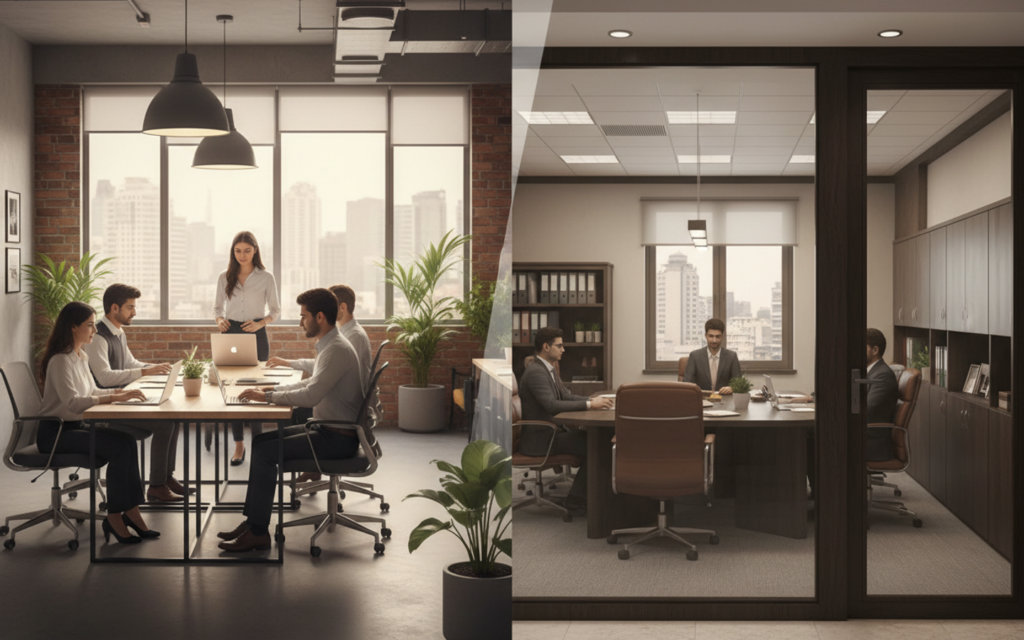
Coworking Space in Delhi can give you a professional working environment along with flexibility, whereas an office gives you more control over the place and exclusiveness. All it boils down to your level of business.
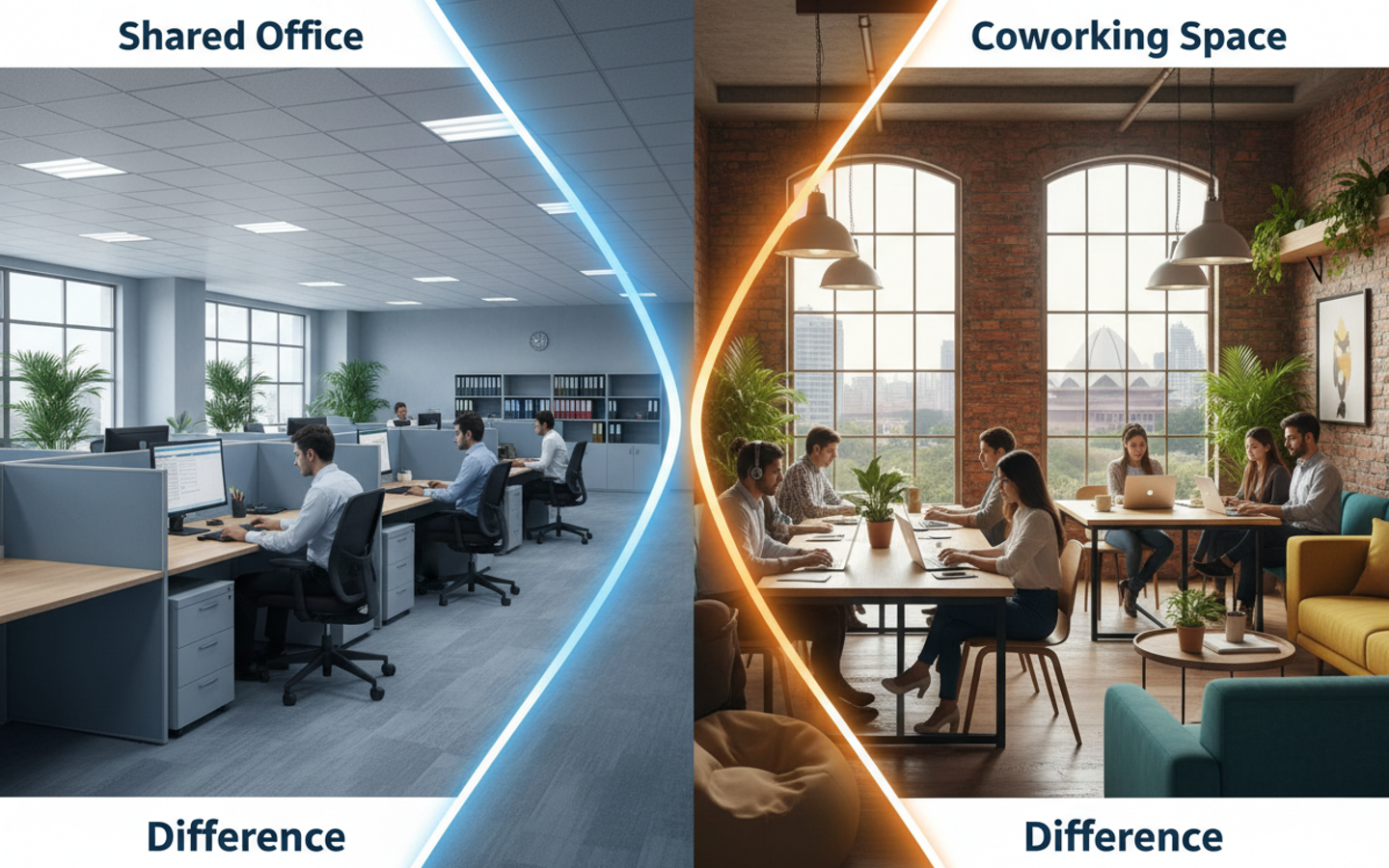
Difference Between Coworking Space and Traditional Office – What Makes Them Different?
A coworking space can be defined as a professionally managed work facility wherein businesses have the option to lease a desk, cabin, or even private offices without owning the whole property. Furniture, internet and meeting areas are typically bundled into the arrangement. Competitor research highlights flexibility and easier scaling.
A traditional office is leased or owned by one business. You control the layout, branding, access, technology and workplace policies. That control also means managing deposits, interiors, furniture, utilities, maintenance and longer lease commitments.
1. Cost: Look Beyond the Monthly Rent
Comparing only monthly rent can give a misleading picture.
With coworking, businesses generally pay for the seats, cabins or space they need, with shared services included. This reduces the capital required before employees can start working.
A traditional office may require a security deposit, fit-outs, furniture, networking, power backup, housekeeping and separate utility expenses. These costs can significantly increase the initial investment.
Best for cost-conscious businesses: Coworking
Established businesses with predictable occupancy may still find a traditional lease worthwhile.
2. Flexibility: Who Controls Your Next Move?
Delhi businesses can change quickly. A startup may hire ten people in six months.
Coworking makes these changes easier because businesses can often add or reduce seats, move into private cabins or choose larger solutions without rebuilding an office. Traditional offices are less agile because expansion or contraction can involve renegotiating leases, relocating or paying for unused space.
Best for changing team sizes: Coworking
3. Privacy and Control: Where Traditional Offices Win
Traditional offices have a clear advantage here.
If your business handles confidential documents, sensitive client discussions or regulated information, exclusive control over access and infrastructure can be important. A private office also lets you design the workspace around your processes.
Modern coworking spaces can address privacy through private cabins, lockable offices and controlled access, but customization depends on the provider.
Best for maximum control: Traditional Office
4. Brand Image and Client Experience
Your office says something about your business before a meeting begins.
A traditional office gives you complete freedom to build a branded environment, from the reception desk to meeting rooms and employee areas. This matters when clients regularly visit.
A premium Coworking Space in Delhi can still provide a polished client experience through professional reception areas, meeting rooms and well-designed shared facilities. For startups, that can create credibility without building everything independently.
Best for full branding: Traditional Office
Best for professional presence with less setup: Coworking
5. Productivity, Networking and Employee Experience
Coworking spaces introduce something a traditional office cannot easily replicate: exposure to a wider business community. Teams may interact with professionals from different industries, creating opportunities for referrals and partnerships.
The trade-off is that open environments may not suit every role, so private cabins can be preferable.
Traditional offices provide more control over the working atmosphere and can be designed around company culture. Amenities depend on what the business invests in.
6. Scalability: Think About Your Business Two Years From Now
A mistake is the choice of space based on present staff numbers.
With 12 members working now and anticipation of 30 members in two years’ time, an office which accommodates 12 people might be too confining after sometime. Having an office which is larger will mean having to pay for unnecessary space.
In the case of coworking, a business will get office space depending on its current needs and grow into larger office space when growth will be clear.
When Should You Choose a Traditional Office?
A traditional office may make more sense if your business:
-
Has a stable team and predictable space requirements
-
Needs extensive customization or branding
-
Handles highly confidential operations
-
Requires exclusive control over access and infrastructure
-
Plans to occupy the same location long term
When Is Coworking the Smarter Choice?
A Coworking Space in Delhi may be better if your business:
-
Is a startup, SME or growing professional firm
-
Wants to minimize upfront office investment
-
Has a hybrid or flexible workforce
-
Expects headcount to change
-
Needs a professional office without managing facilities
-
Wants access to networking and shared amenities
The Middle Ground: Private and Managed Coworking
Modern coworking has evolved beyond open desks. Businesses can choose private cabins, dedicated team areas and managed workspace solutions that combine greater privacy with flexible operations.
It suits companies seeking professional identity and control without taking on every conventional-office responsibility.
Citadel Propcon’s Perspective: Choose for Business Fit, Not Fashion
At Citadel Propcon, the right way to choose the workspace would be based on the requirements of the business as compared to assuming one option being better than the other. Take into account your team size, budget, anticipated growth, client demands, privacy issues, importance of location and flexibility in leasing.
In case of a rapidly growing firm, flexibility would hold greater importance than control, while a specialty business may do well in a traditional office environment.
Final Verdict: Which is the Better Option in Delhi?
There is no single right answer. For a firm that values flexibility, easy setup, scalability and convenience, coworking space would certainly be the better option. For firms that value privacy, customizability, stability and full control, a traditional office space would be the right fit.
Do the math, take into account the total cost involved, project your requirements of the next two to three years and think about the level of control you need. This is how the choice of a workspace would become an advantage to your business.